Cormorant
ELIZABETH COOKE
Cormorant
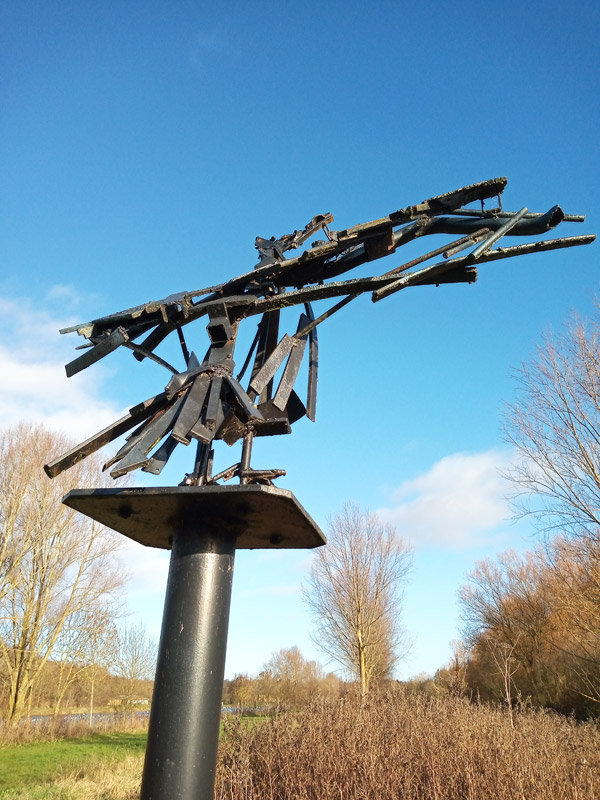
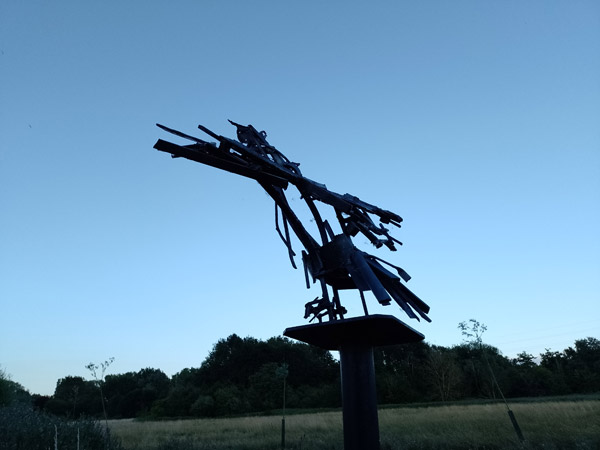
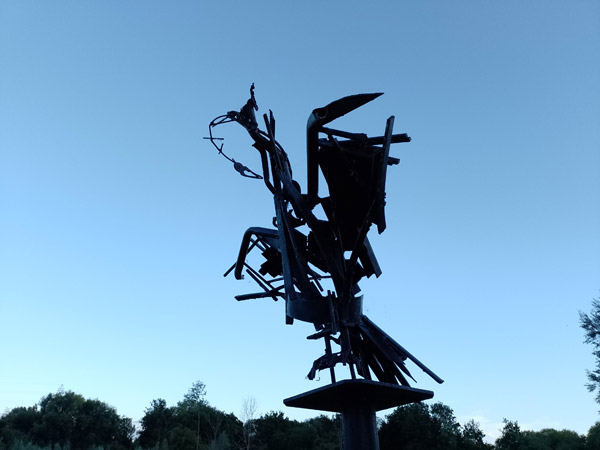
Cormorant, a sculpture by Elizabeth Cooke, is situated in Thorpe Meadows Sculpture Park, where real cormorants visit the waters. The qualities of this bird have been replicated with skill and simplicity using a combination of found and hand-finished materials. Cooke is able to capture movement and poise in the simplest of shapes, resulting in pieces that display fluidity and grace using far less delicate and raw materials. After being on loan from the artist, Cormorant was purchased in 2007.
Elizabeth Cooke works from her studio in Bury St Edmunds, where she accepts a wide range of projects.
About the Artist
Cooke received her initial training at the Laban Centre, a school of contemporary dance. It was a difficult choice for her at the time to pursue dancing rather than art. But now she can see how important her dancing training was for what she does. Having spent so much time in the realm of motion, she unconsciously senses motion and flow in every subject she explores in her work. She often doesn’t realise this purpose until after she has finished a piece, but other times she is aware that she1.
If you have any other details about Cormorant that you would want to share, do get in touch with us. Thank you.
The story behind Cormorant by Elizabeth Cooke
I create a lot of bird sculptures as I am a keen birdwatcher and find that it absorbs a lot of my creative thoughts. I have often seen cormorants stretching their wings whilst I have been out birdwatching. It is commonly thought that they are drying their wings, but interestingly, there are many other theories as well! As a child, I used to read the Noggin the Nog books. There’s a character in those called Graculus—another inspiration for creating a cormorant.
I really feel like the cormorant is posing in the outstretched position hoping we will look at it-it really does show them at their best. The angular shapes they make are amazing. So, in creating the bird, I wanted to portray the incredibleness of nature and of this particular bird.
I often refer to my method as “drawing with steel” and I feel that the Peterborough cormorant is a quite detailed sketch. Not all the lines and shapes have to be accurate, but they give a feeling of the bird. I used recycled steel, scaffolding tubes, and the head was also a piece of scaffolding. The steel plate on the wings had been used by students to practise their welding, so it added a great texture to the piece. I was so thrilled to find that the sculpture park wanted my cormorant. It is such a perfect setting for the sculpture in such a beautiful natural setting that hopefully some real cormorants also go to visit from time to time!2

References:
1. Cooke, E (nd) Elizabeth Cooke Sculpture (online) Available at: https://elizabethcookesculpture.wordpress.com/about/ [Accessed 25 July 2022]
2. Cooks, E., (2021) Cormorant [email]
Images:
Figure 1,-4: Fu, R. {2021) Cormorrant [image]